
A vehicle in New Albany faces a particular blend of conditions. The Ohio River keeps humidity high, feeding mildew and moisture problems inside a car. Indiana's severe storm season brings hail that pits and chips paint. The daily traffic on Grant Line Road and Charlestown Road adds brake dust and road film, and the sun and pollen of the long warm season work on the finish and the cabin. Professional car detailing in New Albany is how Floyd County drivers keep their vehicles clean and protected against all of it. Sun Tint cares for New Albany vehicles from its shop at 3220 Grant Line Rd, backed by over 40 years of experience.
A real detail goes well beyond a wash, and that matters for a New Albany vehicle. A full detail decontaminates the paint, corrects wear, deep-cleans the interior, and protects the surfaces it cleans. For a vehicle facing Ohio River humidity, storm exposure, and daily Floyd County driving, that thorough approach restores condition rather than just rinsing the surface. Understanding what the local environment does to a vehicle explains why detailing is worthwhile here.

New Albany and the surrounding Floyd County area put a specific set of stresses on a vehicle through the year. The local conditions that make car detailing worthwhile here are familiar to anyone who drives them.
Each of these calls for a different part of the detailing process. The humidity that hangs over the river valley drives interior moisture problems, feeding mildew in the carpets and upholstery that only a thorough interior detail addresses. Hail leaves surface damage that decontamination and protection help manage. The sap and pollen from the Greenway corridor bond to a clear coat and can etch it if left too long. Detailing in New Albany matches the treatment to each of these, which a wash cannot.
The interior moisture problem deserves particular attention in New Albany. The constant humidity off the Ohio River works into a vehicle's cabin, and moisture trapped in carpets, seat foam, and headliners feeds mildew and the musty odor that comes with it. A car detailing service treats this at the source, extracting moisture and soil from the carpets with hot water extraction, cleaning the affected surfaces, and eliminating the odor rather than covering it. For a New Albany vehicle in a humid river valley, that interior moisture care is one of the more valuable parts of a detail.
Professional car detailing in New Albany follows a sequence built to restore a vehicle inside and out. The exterior starts with a careful hand wash and dry, then clay bar and iron decontamination that pull bonded contaminants and brake dust out of the paint and wheels. A wax or paint sealant protects the finish, wheels and glass are cleaned, trim is treated, and corrective steps address the wear the environment adds. Each step prepares the surface for the next, which is what a proper detail requires.
The interior detail is just as thorough. A full vacuum clears loose debris, carpets and mats are shampooed, and hot water extraction lifts the embedded soil and moisture that the humid Floyd County climate works into the fibers. Leather is cleaned and conditioned, hard surfaces are wiped down, interior glass is cleaned, and odor elimination treats the mildew smell that river humidity can leave. Thorough car detailing leaves a New Albany cabin genuinely clean and fresh, not just tidied.
Because Sun Tint handles detailing alongside window tint, ceramic coating, and paint protection film, a New Albany owner can get everything at the Grant Line Road shop. A ceramic coating protects the paint and makes the vehicle easier to keep clean in a humid climate. Paint protection film guards high-impact areas against road debris. Window tint cuts the summer heat and helps protect the interior from UV. That one-stop approach spares an owner from coordinating across separate shops and lets the services build on each other.
Car detailing in New Albany rewards a shop that knows the local conditions and works in the right environment. Sun Tint details vehicles in-shop in a dedicated bay at 3220 Grant Line Rd, under controlled lighting and with professional-grade products, reaching a standard outdoor work cannot. A detailer who knows what Ohio River humidity, storm season, and Floyd County driving do to a vehicle matches the treatment to those conditions, so the detail addresses what a local vehicle actually faces.
That local knowledge sits on over 40 years of vehicle care and a network of locations across Kentucky and Southern Indiana. For New Albany and the surrounding Floyd County communities, from Georgetown to Floyds Knobs to Greenville, that combination of a local Grant Line Road shop, professional in-shop conditions, and decades of experience is what makes professional car detailing worthwhile. A vehicle gets care matched to where and how it is driven.
Each season in the Ohio River valley hands a New Albany vehicle a different challenge. Spring brings pollen and tree sap from the Ohio River Greenway corridor, along with the first severe storms. Summer brings hail-bearing thunderstorms, strong UV that heats a parked cabin, and the constant river humidity. Fall adds falling debris, and winter brings road salt and the humidity that never fully lifts. A vehicle detailed with the season in mind stays ahead of whatever the river valley is producing at each point in the year, from storm damage to interior moisture.
Timing detailing to the seasons is a practical approach for a Floyd County owner. A detail ahead of storm season leaves the finish clean, decontaminated, and protected going into the hail-bearing months. A detail through the humid stretches clears the interior moisture before mildew sets in. Matching the care to the season addresses a New Albany vehicle when the local conditions are hardest on it, which is a more sensible approach than cleaning on a fixed schedule that ignores the weather.
New Albany's Mansion Row and historic districts are home to classic and collector vehicles, and those cars need careful, knowledgeable detailing. An older or restored vehicle has finishes and materials that call for gentle, appropriate treatment rather than aggressive correction, and the humidity and storm exposure of the river valley are particular threats to a car an owner has invested in preserving. Car detailing in New Albany for a collector vehicle protects an original or restored finish, manages the humidity that threatens the interior, and keeps a prized car in the condition its owner wants.
Protecting a collector car is largely about controlling the environment's effects. A ceramic coating guards a finish against contamination and moisture, careful interior care keeps humidity from feeding mildew in upholstery that may be original, and consistent detailing keeps a valued vehicle from sliding in condition. For a New Albany owner with a classic or historic vehicle, that considered, protective care is what a detail should provide, and it calls for a shop with the experience to handle a special vehicle appropriately.

Because Ohio River humidity is constant rather than seasonal, staying ahead of it is an ongoing effort for a New Albany owner. A vehicle detailed periodically does not give moisture the time to establish mildew in the carpets, seat foam, and headliner, whereas a vehicle left alone in the humidity develops the musty cabin that is so hard to clear after the fact. Regular car detailing in New Albany, with its thorough interior extraction, is the way to keep a vehicle ahead of the moisture rather than fighting an entrenched problem. In a humid river climate, that consistency is what keeps an interior fresh.

A professional detail for a New Albany vehicle begins with understanding what the vehicle needs, which is why a free quote and assessment come first at the Grant Line Road shop. A technician looks at the condition of the paint, the wheels, the interior, and the specific problems the vehicle has picked up from Floyd County driving and the river climate, then recommends a treatment and shares clear pricing before any work begins. A Floyd County owner knows exactly what is included and what it costs, and the treatment is matched to the vehicle rather than sold as a fixed package.
That up-front clarity reflects how a trusted local shop operates. Transparent pricing shared before the work, a clear explanation of what the vehicle needs, and a result delivered as described are what earn an owner's confidence and bring them back. For a New Albany owner choosing where to have a vehicle cared for, that combination of honesty and quality is worth as much as the work itself, and it is a reasonable standard to hold any shop to.
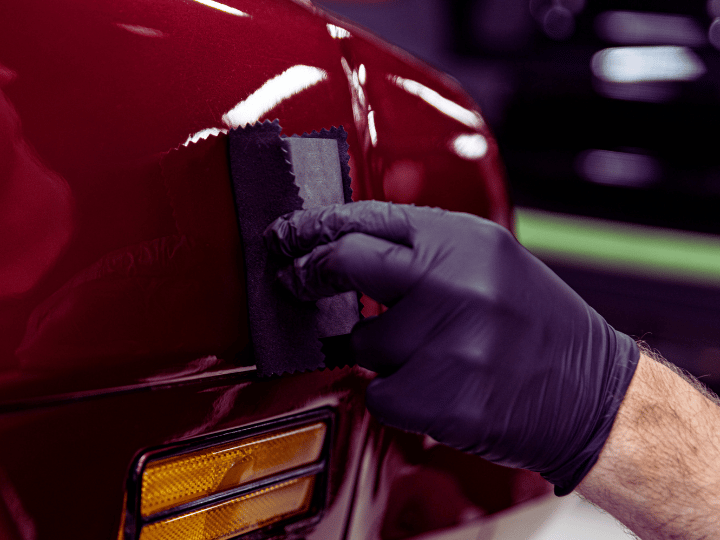
A practical advantage for a New Albany owner is that a single shop on Grant Line Road can handle the full range of vehicle care. Rather than taking a vehicle to one place for a detail, another for tint, and a third for protection, an owner can have it all coordinated by the same team at one location. The detail prepares the surfaces, and the protective services build on that clean foundation, so the results work together against the river valley's storms and humidity. For a Floyd County owner, that consolidation of quality vehicle care into one local relationship is a real part of the value.
However a Floyd County owner uses a vehicle, whether commuting across the Sherman Minton Bridge, parking downtown, or keeping a classic in a Mansion Row garage, a professional detail keeps it in the condition the owner wants. The work addresses what the river valley does to a vehicle and protects against more of it, which over time preserves both the vehicle's appearance and its value against everything a New Albany year delivers.
Sun Tint is a vehicle care company with over 40 years of experience and locations across Kentucky and Southern Indiana, with its New Albany shop at 3220 Grant Line Rd offering car detailing alongside window tint, ceramic coating, and paint protection film, all done in-shop in a dedicated detailing bay. With professional-grade products, trained technicians, a one-stop approach, and free quotes shared before any work begins, the team restores and protects Floyd County vehicles inside and out. For car detailing in New Albany, contact Sun Tint or call (812) 944-0001 for a free quote.
|
New Albany, Indiana
|
|
|---|---|

New Albany as seen from the Ohio River
|
|

Flag

Seal
|
|

Location of New Albany in Floyd County, Indiana.
|
|
| Coordinates: 38°18′33″N 85°49′24″W / 38.30917°N 85.82333°W | |
| Country |  United States |
| State |  Indiana |
| County | Floyd |
| Township | New Albany |
| Government
|
|
| • Mayor | Jeff Gahan (D) |
| Area | |
|
• Total
|
15.64 sq mi (40.50 km2) |
| • Land | 15.47 sq mi (40.06 km2) |
| • Water | 0.17 sq mi (0.45 km2) |
| Elevation | 469 ft (143 m) |
| Population
(2020)
|
|
|
• Total
|
37,841 |
| • Density | 2,447/sq mi (944.7/km2) |
| Time zone | UTC−5 (EST) |
| • Summer (DST) | UTC−4 (EDT) |
| ZIP codes |
47150-47151
|
| Area codes | 812 & 930 |
| FIPS code | 18-52326[3] |
| GNIS feature ID | 2395181[2] |
| Website | cityofnewalbany |

New Albany (/ˈɔːlbəni/) is a city in New Albany Township, Floyd County, Indiana, United States, situated along the Ohio River, opposite Louisville, Kentucky. The population was 37,841 as of the 2020 census.[4] The city is the county seat of Floyd County.[5] It is bounded by I-265 to the north and the Ohio River to the south, and is considered part of the Louisville metropolitan area. The mayor of New Albany is Jeff Gahan, a Democrat; he was re-elected in 2023.
| Census | Pop. | Note | %± |
|---|---|---|---|
| 1830 | 2,079 | — | |
| 1840 | 4,226 | 103.3% | |
| 1850 | 8,181 | 93.6% | |
| 1860 | 12,647 | 54.6% | |
| 1870 | 15,396 | 21.7% | |
| 1880 | 16,423 | 6.7% | |
| 1890 | 21,059 | 28.2% | |
| 1900 | 20,628 | −2.0% | |
| 1910 | 20,629 | 0.0% | |
| 1920 | 22,992 | 11.5% | |
| 1930 | 25,819 | 12.3% | |
| 1940 | 25,414 | −1.6% | |
| 1950 | 29,346 | 15.5% | |
| 1960 | 37,812 | 28.8% | |
| 1970 | 38,402 | 1.6% | |
| 1980 | 37,103 | −3.4% | |
| 1990 | 36,322 | −2.1% | |
| 2000 | 37,603 | 3.5% | |
| 2010 | 36,372 | −3.3% | |
| 2020 | 37,841 | 4.0% | |
| Source: US Census Bureau | |||
The land of New Albany was officially granted to the United States after the American Revolutionary War. The territory had been captured by George Rogers Clark in 1779. For his services Clark was awarded large tracts of land in Southern Indiana including most of Floyd County. After the war, Clark sold and distributed some of his land to his fellow soldiers. The area of New Albany ended up in the possession of Col. John Paul.
New Albany was founded in July 1813 when three brothers from New York —Joel, Abner, and Nathaniel Scribner—arrived at the Falls of the Ohio and named the site after the city of Albany, New York.[6] They purchased the land from Col. John Paul. New Albany was platted by John Graham on land owned by the Scribner brothers. In 1814, Joel and Mary Scribner built their home in New Albany; the Scribner House[7] still stands today.
New Albany was incorporated as a town in 1817 as part of Clark County. In 1819, three years after Indiana was admitted as a state, New Albany became the seat of government for newly established Floyd County.[8] A courthouse was finally built in 1824.
New Albany grew rapidly and was the largest city in Indiana from 1816 until 1860, when it was overtaken by Indianapolis. Before the Civil War, over half of Hoosiers worth over $100,000 (~$1.74 million in 2024) lived in New Albany,[9] making it by far the wealthiest part of the state. The steamboat industry was the engine of the city's economy during the mid-19th century. Fueled by abundant forests for lumber, at least a half-dozen shipbuilders were in operation and turned out a multitude of steamboats and packet boats, including the Robert E. Lee, Eliza Battle, the Eclipse, and the A.A. Shotwell. Shipbuilding was accompanied by a wide range of ancillary business including machine shops, foundries, cabinet and furniture factories, and silversmith shops. Its second-largest business was the American Plate Glass Works.
In 1847, the city was connected to the port at Michigan City, Indiana on Lake Michigan via the Monon railroad. In 1853, the New Albany High School opened, the first public high school in the state. The original school was built at the corner of West First Street and Spring Street. New Albany would also be the first in the state to create a consolidated school district several years later.
Ashbel P. Willard, governor of the state of Indiana, dedicated the Floyd County Fairgrounds in 1859. That year, the Indiana State Fair was held in New Albany. During the Civil War, the fairgrounds were converted to become Camp Noble and used as a muster point for the area's regiments.
During the American Civil War, New Albany served as both a supply center for Union troops and as a medical care center for wounded soldiers. Up to 1,500 wounded soldiers were treated in New Albany during the war, and many non-medical buildings were converted into makeshift hospitals. In 1862, Abraham Lincoln established one of the first seven national cemeteries in New Albany for burying the many war dead. Despite the ongoing war, a new courthouse was built in 1865, which was used until the 1960s, when the current City-County courthouse was constructed, also the first in Indiana.

The Town Clock Church, now the Second Baptist Church, was used as the New Albany stop in the Underground Railroad.[10] The original steeple was destroyed by a lightning strike in 1915, and a new replica steeple was not completed until 101 years later in 2016.

During the Civil War, New Albany businesses were boycotted by Confederates because it was in a Union state and by the North because it was considered too friendly to the South. Indianapolis overtook New Albany as Indiana's largest city in 1860, and across the river, Louisville's population grew much faster. New Albany never regained its original stature. The once robust steamboat industry ended by 1870, with the last steamboat built in New Albany named, appropriately, the Robert E. Lee.
During the second half of the 19th century, New Albany experienced an industrial boom despite the collapse of the steamboat industry. The advent of railroads created economic opportunity for the city as a pork packing and locomotive repair center. A bridge was built across the Ohio River in 1886, providing a rail and road connection with Kentucky. American Plate Glass Works opened in 1865 and employed as many as 2,000 workers. When the factory relocated in 1893, New Albany lost a large part of its population and went into economic decline.

In the early 20th century, New Albany became a center of plywood and veneer manufacturing, and its largest employer was the New Albany Veneering Company. By 1920, New Albany was the largest producer of plywood and veneer in the world, with other producers including Indiana Veneer Panel Company and Hoosier Panel Company.
On March 23, 1917, a tornado struck the north side of New Albany, killing at least 46 people.[11][12]
Interstate 64 was built through New Albany in 1961 and led to the construction of the Sherman Minton Bridge. The project cost $14.8 million. The bridge was named for U.S. Senator and later U.S. Supreme Court Justice Sherman Minton, who was a native of nearby Georgetown and practiced law in New Albany. The bridge was named the "most beautiful long-span bridge of 1961" by the American Institute of Steel Construction.
Charles A. Prosser lived in New Albany for much of his life. Charles Allen Prosser School of Technology was named in honor of his accomplishments as the "father of vocational education." In the mid and late 20th century, New Albany became an innovator in using electronic media in education. New Albany High School, a public school, started WNAS-FM in 1949, which is the nation's oldest continuously operating high school radio station. In the late 1960s, Slate Run Elementary School started WSRS, a non-licensed student-produced closed-circuit television service for its classrooms, one of the nation's first in an elementary school.
In January 1937, a major flood struck the region. New Albany, like the other river towns, had no flood walls and no methods of regulating the river. The Ohio River rose to 60.8 feet at New Albany, leaving most of the town under 10 or more feet of water for nearly three weeks. The flood was the worst disaster to befall the city.
After the flood, New Albany was the first city in the region to begin construction on massive flood walls around the city. New Albany's flood walls served as examples for those constructed around Louisville and Clark County.

New Albany is located at
38°18′07″N 85°49′17″W / 38.301935°N 85.821442°W (38.301935, −85.821442).[13]
According to the 2010 census, New Albany has a total area of 15.111 square miles (39.14 km2), of which 14.94 square miles (38.69 km2) (or 98.87%) is land and 0.171 square miles (0.44 km2) (or 1.13%) is water.[14]
As of the 2020 census, New Albany had a population of 37,841. The median age was 37.7 years. 21.1% of residents were under the age of 18 and 17.5% of residents were 65 years of age or older. For every 100 females there were 92.2 males, and for every 100 females age 18 and over there were 89.2 males age 18 and over.[15][16]
99.9% of residents lived in urban areas, while 0.1% lived in rural areas.[17]
There were 16,441 households in New Albany, of which 26.1% had children under the age of 18 living in them. Of all households, 32.6% were married-couple households, 23.2% were households with a male householder and no spouse or partner present, and 34.8% were households with a female householder and no spouse or partner present. About 36.1% of all households were made up of individuals and 12.9% had someone living alone who was 65 years of age or older.[15]
There were 17,983 housing units, of which 8.6% were vacant. The homeowner vacancy rate was 1.8% and the rental vacancy rate was 6.9%.[15]
| Race | Number | Percent |
|---|---|---|
| White | 30,027 | 79.4% |
| Black or African American | 3,463 | 9.2% |
| American Indian and Alaska Native | 174 | 0.5% |
| Asian | 348 | 0.9% |
| Native Hawaiian and Other Pacific Islander | 7 | 0.0% |
| Some other race | 923 | 2.4% |
| Two or more races | 2,899 | 7.7% |
| Hispanic or Latino (of any race) | 1,925 | 5.1% |
According to the 2023 American Community Survey, the median household income in New Albany was $54,152, compared to the Indiana state average of $69,477.[18][19] According to the same survey, 18.4% of the population in New Albany lived below the poverty line, compared to 12.3% of Indiana as a whole.[18][19]
As of the census[20] of 2010, there were 36,372 people, 15,575 households, and 9,175 families living in the city. The population density was 2,434.5 inhabitants per square mile (940.0/km2). There were 17,315 housing units at an average density of 1,159.0 per square mile (447.5/km2). The racial makeup of the city was 85.8% White, 8.7% African American, 0.2% Native American, 0.7% Asian, 1.7% from other races, and 2.9% from two or more races. Hispanic or Latino of any race were 3.7% of the population.
There were 15,575 households, of which 29.9% had children under the age of 18 living with them, 35.4% were married couples living together, 18.2% had a female householder with no husband present, 5.2% had a male householder with no wife present, and 41.1% were non-families. 33.7% of all households were made up of individuals, and 11.1% had someone living alone who was 65 years of age or older. The average household size was 2.27 and the average family size was 2.89.
The median age in the city was 37.1 years. 22.9% of residents were under the age of 18; 10.1% were between the ages of 18 and 24; 26.9% were from 25 to 44; 26.4% were from 45 to 64; and 13.9% were 65 years of age or older. The gender makeup of the city was 47.5% male and 52.5% female.
As of the census[3] of 2000, there were 37,603 people, 15,959 households, and 10,054 families living in the city. The population density was 2,571.1 inhabitants per square mile (992.7/km2). There were 17,098 housing units at an average density of 1,169.1 per square mile (451.4/km2). The racial makeup of the city was 84.00% White, 12.93% African American, 0.31% Native American, 0.42% Asian, 0.04% Pacific Islander, 0.67% from other races, and 1.62% from two or more races. 1.36% of the population is Hispanic (Hispanics can be of any race).
There were 15,959 households, out of which 29.6% had children under the age of 18 living with them, 42.5% were married couples living together, 16.1% had a female householder with no husband present, and 37.0% were non-families. 30.8% of all households were made up of individuals, and 11.7% had someone living alone who was 65 years of age or older. The average household size was 2.31 and the average family size was 2.88.
In the city, the population was spread out, with 24.0% under the age of 18, 9.6% from 18 to 24, 29.2% from 25 to 44, 21.8% from 45 to 64, and 15.4% who were 65 years of age or older. The median age was 37 years. For every 100 females, there were 88.5 males. For every 100 females age 18 and over, there were 84.6 males.
The median income for a household in the city was $34,923, and the median income for a family was $41,993. Males had a median income of $31,778 versus $24,002 for females. The per capita income for the city was $18,365. About 11.4% of families and 13.7% of the population were below the Poverty threshold, including 21.6% of those under age 18 and 9.1% of those age 65 or over.

New Albany's Main Street features a large collection of late 19th century mansions from the city's heyday as a shipbuilding center. The centerpiece is the Culbertson Mansion, a three-story French Second Empire Style structure, which is today an Indiana state memorial.[21]
Every October, New Albany hosts the Harvest Homecoming festival, one of the largest annual events in the state. Festivities begin on the first weekend of October, but the main part, consisting of midway rides, shows, and booths lining the downtown streets, lasts from Thursday-Sunday of the second weekend in October. The 2020 Harvest Homecoming was cancelled due to the coronavirus pandemic.
Indiana University Southeast, one of the eight campuses of the Indiana University system, is located on the northern edge of the city. The Purdue Polytechnic Institute also maintains a satellite campus in the city.
New Albany-Floyd County Consolidated School Corporation operates public schools. The Children's Academy of New Albany is the public preschool program.[22]
Elementary schools in the city limits include:
Grant Line Elementary School is in an unincorporated area near New Albany.[23]
Middle schools in the city limits include:
New Albany High School is the city's senior high school with the city being in its attendance boundary.[26]
The Greater Louisville Regional Japanese Saturday School (グレータールイビル日本語補習校 Gurētā Ruibiru Nihongo Hoshūkō), a Japanese weekend supplementary school, is affiliated with IUS's Japan Center.[27] It was established in January 1988 and holds its classes at Hillside Hall; its office is elsewhere in New Albany.[28]
The city has a free lending library, the New Albany-Floyd County Public Library.[29]
cite web: CS1 maint: deprecated archival service (link)

|
Places in Greater Louisville
|
|
|---|---|
| City |

|
|
|---|---|---|
| Towns | ||
| Townships | ||
| CDPs | ||
| Other communities |
||
| History |
|
 |
|---|---|---|
| Geography | ||
| Government |
|
|
| Transportation | ||
| Other subject areas |
||
| Top subjects | ||
| National Historic Landmarks |
||
| Prominent suburbs (over 10K pop.) |
||
| International | |
|---|---|
| National | |
| Geographic | |
| Other | |


